

Quantity Planning and Scheduling (QPS)
Challenges
Engineering quantity statistics is a core foundation for cost control, schedule planning, material procurement and settlement audit in the construction of large petrochemical projects. Due to the project's characteristics of large scale, complex processes, intensive professional intersection, long construction cycle and numerous participants, this work runs through the whole construction cycle and faces multiple prominent challenges in design, construction, professional collaboration, data management, construction mode and personnel process management.
What is QPS
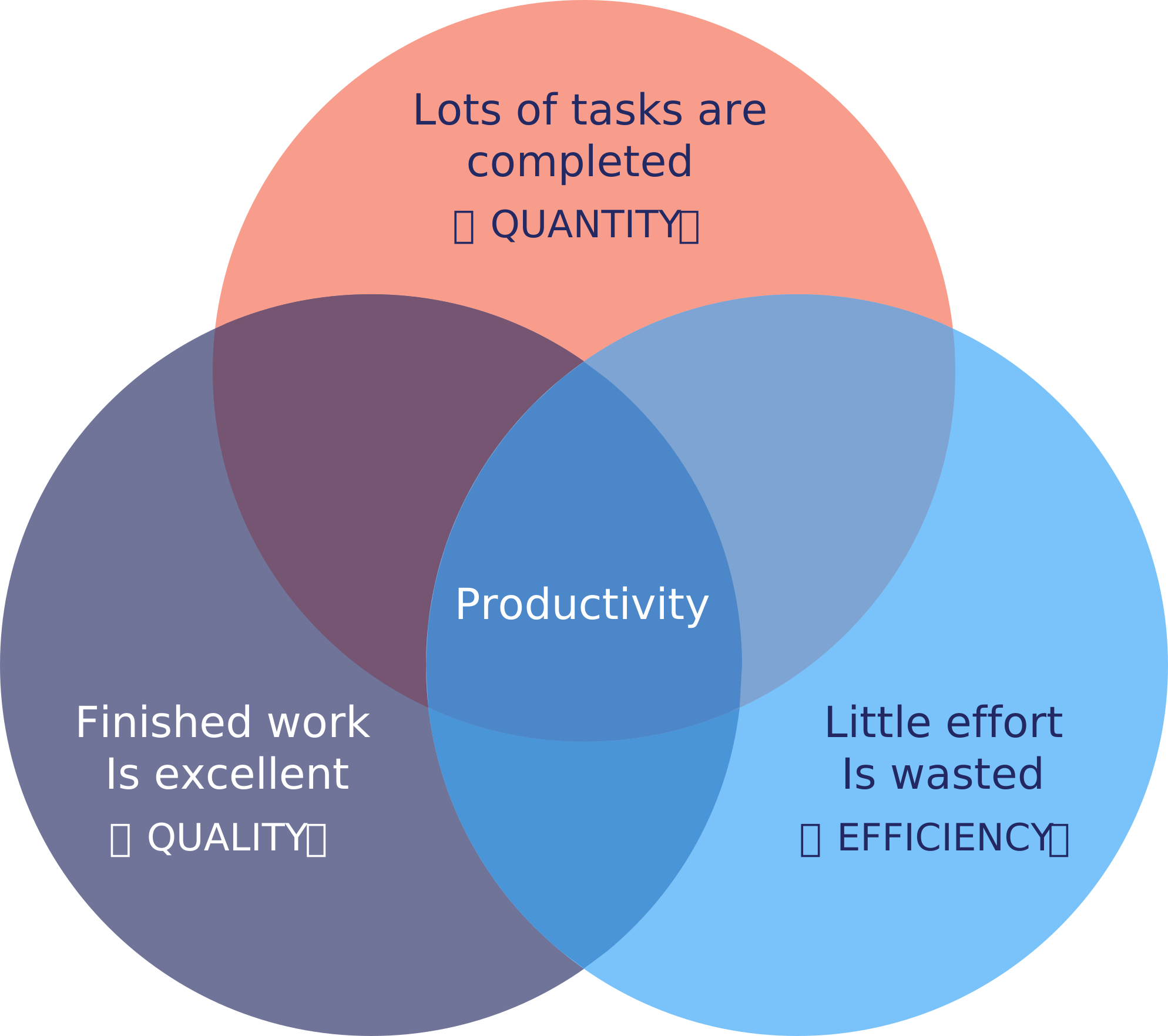
Quantity Planning System (QPS), the professional quantity planning and management system, is a standardized and full-cycle data-driven platform tailored for large-scale complex projects (e.g., petrochemical, nuclear power, construction, hydropower). It is designed to address core project management challenges—quantity control, resource allocation, productivity monitoring, and construction period management—and deliver targeted insights on optimizing quantity management efficiency through end-to-end support from planning and feedback to analysis.
Quantity Planning System (QPS) enables rapid formulation of accurate quantity plans from the outset, helping enterprises deliver projects on time and within budget. Leveraging standardized classification systems (PBS/QBS/CBS/WBS), built-in industry template libraries, domestic IT innovation support, and multi-terminal access (WEB, APP, PC client), it empowers flexible and efficient operation for project teams. It provides strong support in plan formulation, dynamic progress tracking, cross-system collaboration (seamless bidirectional integration with PPE), and data visualization (S-curves, classified reports), facilitating the achievement of precise quantity control and overall project performance improvement. It also supports Excel import/export for convenient data interaction and multi-dimensional productivity calculation (budget/actual/cumulative/target productivity), ensuring accurate and efficient quantity management throughout the project lifecycle.
Core Functionality
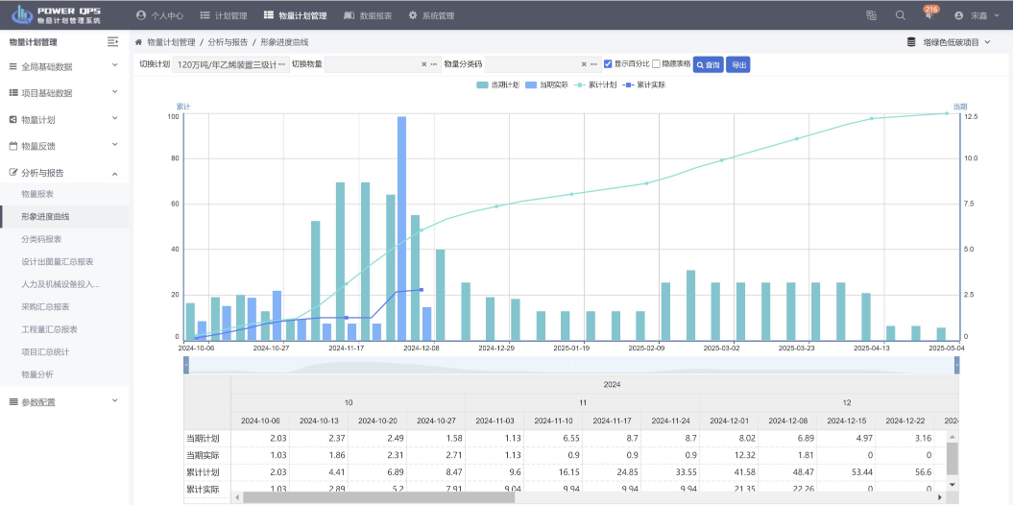
Quantity Progress Curves
View the quantity progress curve by PBS, quantity, and quantity codes. Supports display in quantity and percentage(%).
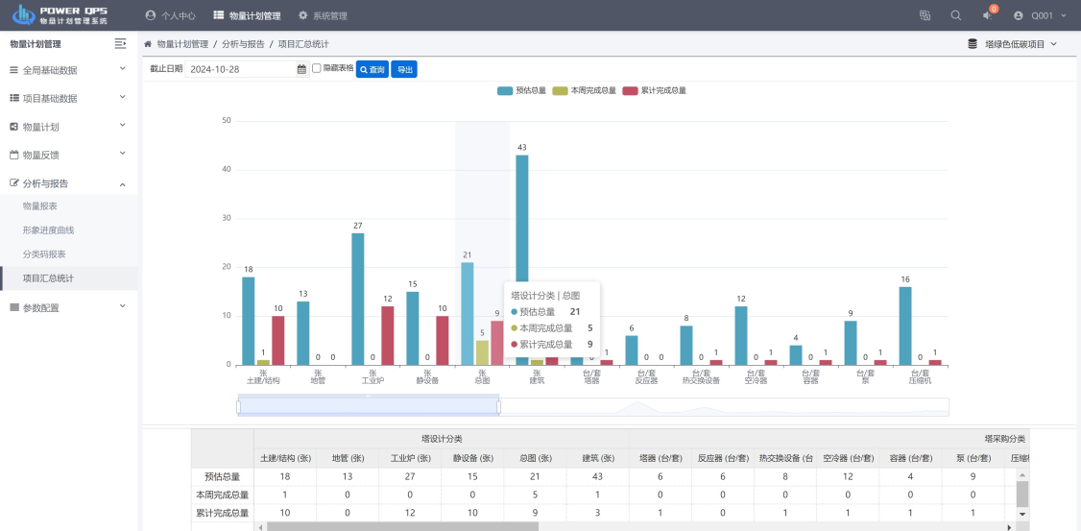
Project Summary Report
View the code report by project summary and view historical period data by selecting the date.
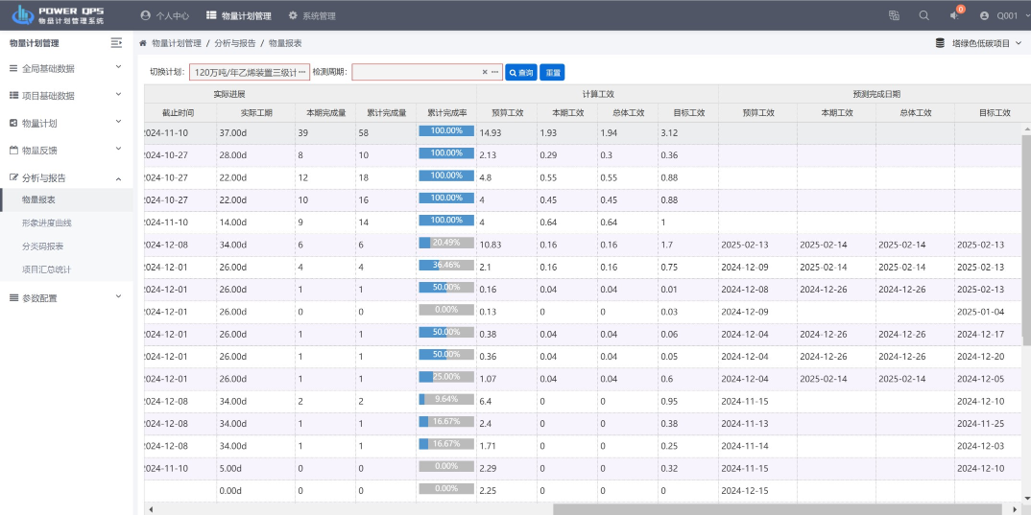
Quantity Reports
View quantity reports by PBS and period.
Application Value
For large-scale complex projects (e.g., petrochemical, nuclear power), QPS provides a full-cycle standardized and data-driven solution targeting the core challenges of engineering quantity statistics. It effectively addresses issues such as data deviations, collaboration barriers, and inaccurate predictions, significantly enhancing the accuracy of engineering quantity control, collaboration efficiency, and decision support capabilities.
- Standardize classification, unify statistical standards
- Full-cycle coverage, resolve data deviations
- Auto-calculate productivity, accurate prediction
- Integrate PPE, enhance collaboration efficiency
- Visualization tools, intuitively present info
- Adapt to domestic IT innovation, meet compliance